Explore Being Yoga through the question or practice that speaks to you today. These doorways introduce James Traverse’s teaching through body, breath, Listening, Welcoming and self-inquiry. Choose an interest below, or follow the guided Spiritual Awakening Journey.
Prefer a guided route? Follow the Spiritual Awakening Journey: Seven Steps and a Return. It gathers the teachings into seven BREATHE themes, with introductions, selected readings, practical invitations and a clear next step at each stage. You can also explore the short introductions below at your own pace.

In Being Yoga’s approach, rooted in Advaita Vedanta, spiritual awakening is the recognition of a wholeness that is already present. Meditation and embodied inquiry support attention, understanding and assimilation; they do not require you to produce a special state. The explorations below are doorways into the teaching, rather than levels of spiritual attainment.
Start with a five-minute meditation · Understand spiritual awakening
Why? Why study all this? For peace of mind, lasting contentment and well-being. The point is self-knowledge: wisdom that includes and transcends intellectual knowledge. Read the purpose of the inquiry.
Explore James’s teaching in everyday life
Being Okay with Not Knowing Is a Living Meditation connects inquiry with decisions, relationships and ordinary uncertainty. Read James Traverse’s teaching, watch the eight-minute explainer with AI narration, or follow the edited transcript. Then try the short practice in an everyday conversation.
Understand the teaching
Read Spiritual Awakening for the meaning of awakening and the perspective taught here. A moment of calm, an unusual experience and a clearer understanding of who you are need not be the same thing.
Pause and reflect: What are you hoping to discover? Let the question remain open. For the embodied approach behind the teaching, read What Is Being Yoga?
Begin with body and breath
Try How to Meditate: A Simple Practice of Being Present. Sit comfortably, feel the support beneath you, hear the room and notice natural breathing. When attention wanders, return gently. A busy mind is welcome.
Try today: Practise for five comfortable minutes, or less. Finish without grading the sitting. If breathing is an uncomfortable focus, use your feet, hands or nearby sounds. Adjust your position or stop whenever needed.
Prefer to watch first? Demystifying Meditation offers an eight-minute explainer and transcript. If thinking keeps drawing you away, continue with meditating with a busy mind.
Notice experience and interpretation
Read Mindfulness and Self-Inquiry: What Is the Difference?. Mindfulness notices what is happening; inquiry also examines the assumptions through which you understand it.
Try today: When a reply to a message is late, distinguish the event—no reply yet—from the explanation you add, such as “They are ignoring me.” Notice the feeling without turning the explanation into a final verdict about yourself. Practical action, boundaries and care still matter.
Explore “Who am I?”
Follow the five-minute exploration in Self-Inquiry Meditation. Ask gently, “What do I mean by ‘I’ right now?” Notice any image, thought or sensation that appears. You do not need to repeat the question insistently or find a perfect verbal answer.
Pause and reflect: Is this something I am noticing, something I remember reading, or both? Return to the body and the room when inquiry becomes a mental debate.
Explore the BREATHE course
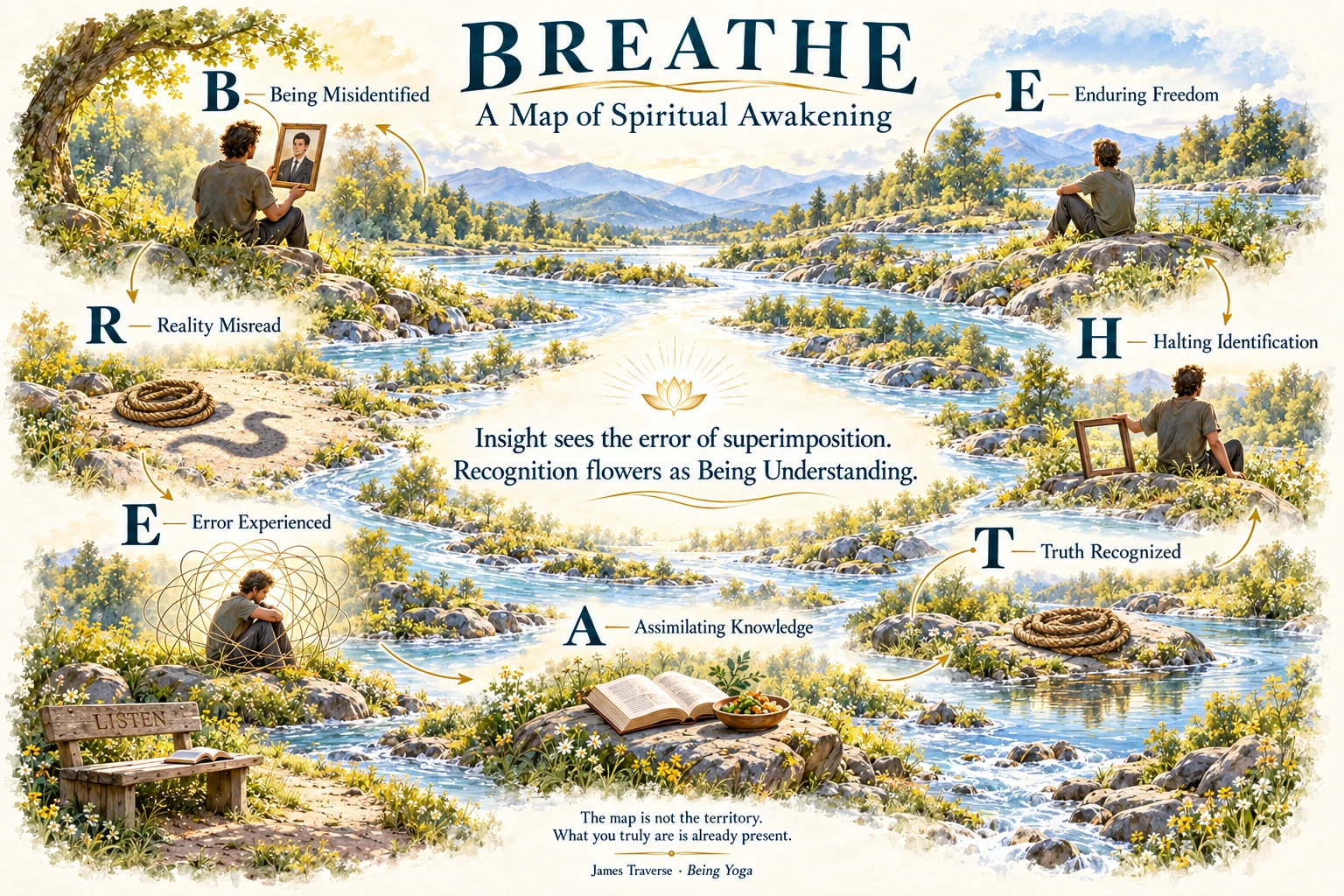
The seven-part BREATHE Framework connects identity, interpretation and recognition through stories, teaching metaphors and reflections. Begin with Being Misidentified and follow the companion chapters for the full story.
BREATHE is a framework for inquiry. Breath awareness is one support within it; the seven parts are not a breathing technique or a timetable for awakening. The BREATHE app offers reading, private reflections and a breathing-meditation guide with adjustable inhalation, pause, exhalation and pause timings.
Try today: Read one chapter, put the screen aside and notice one ordinary example that relates to its question. Let a brief reflection be enough.
Bring listening into daily life
Continue with The Yoga of Listening. Feel your feet during a conversation and hear the other person to the end of a sentence before preparing your response.
Pause and reflect: What did I hear, and what did I assume? Let understanding become a concrete act of attention, honesty or care. Explore spiritual yoga practices for everyday life when you want further examples.
After a moment of insight, read Spiritual Awakening in Daily Life: What to Do After an Insight. Try its short pause-and-listen practice during a routine task or a conversation, then notice one action that expresses care.
Welcoming is a foundation of this approach: space for the way you show up, and Love Lived in relationship. Explore Relationship: Welcoming, Listening and Love Lived, or begin with the short practices in ‘Who Am I?’ — An Experiential Answer.
Continue at your own pace
Return to a useful practice rather than collecting lessons as achievements. The practice library groups the next explorations by question. You can also ask James about teaching sessions or read about his background and influences.