
Welcoming Is the Foundation of Relationship
Welcoming is the “how to” of relationship. It gives Listening, Love and understanding their expression in how we meet one another.
Relationship is usually spoken of as something between people. It includes friendship, family, partnership, work and the many ways we meet one another. Yet relationship also concerns how we meet a sensation, a thought, a changing circumstance—and how we understand what we truly are and how we appear.
Welcoming, like Listening, is a fundamental pillar of my practice and teaching. Welcoming is space: like the space around the body that welcomes whatever way you show up. It does not first measure you against an ideal. The way you show up is not merely okay. It is welcomed.
Welcoming is another word for Love. Welcoming is Love Lived.
Where I Learned Welcoming
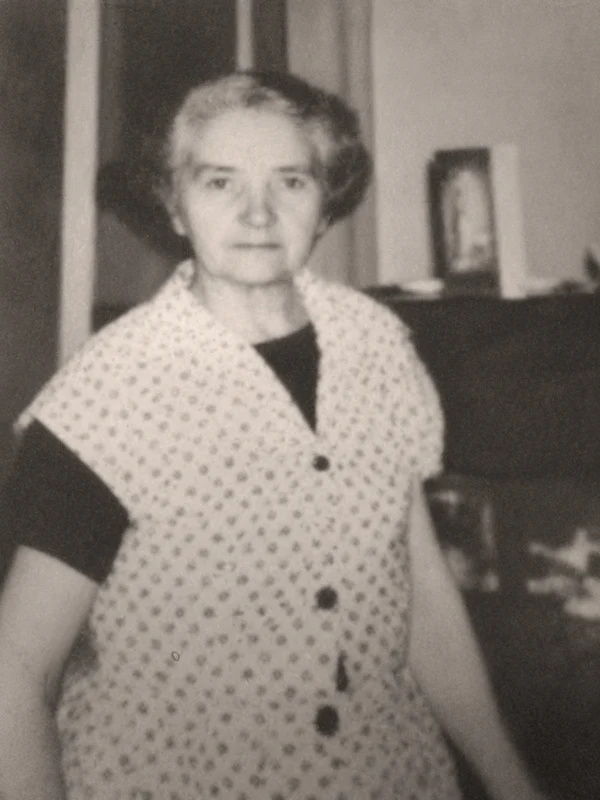
My father’s mother loved me unconditionally. Her firstborn child, my uncle James, died of pneumonia in 1938 when he was twenty years old. I was born in 1952 and was named James after him. In her eyes, I could do no wrong. I could trust that she would be there for me, whatever happened.
When I was thirteen, I was injured playing street hockey. Another boy took a slapshot, and a stone struck the corner of my left eye. I was in pain immediately and went home. My discomfort was initially dismissed. After three days and nights of severe pain, I was taken to a doctor I had previously seen for nosebleeds. He called an ambulance as soon as he saw me. I underwent emergency surgery to remove a blood clot on my brain following internal bleeding caused by the injury.
After the operation, the surgeons were concerned that movement might cause the bleeding to begin again. Both my eyes were blindfolded, I was strapped to the bed, and sandbags were placed on either side of my head. I could not see or move freely.
My grandmother was ill herself, yet she walked to the hospital and was there every morning, waiting for visiting hours to begin. She stayed until she had to leave and returned when evening visiting hours opened. She held my hand and stayed with me as much as she could. For three weeks, she never missed a day or an opportunity to be with me.
I felt sustained by her love through that recovery. When I was in pain and unable to see or move, she came, held my hand and returned. I did not have to earn her love or become different to receive it. Her Welcoming took the ordinary, extraordinary form of showing up.
I can still feel her love to this day. That is Welcoming, and it is what I learned from her.
The first instant I met Jean Klein, I felt that same welcome. It was like seeing my grandmother in a male form. The love I had known through her was immediately familiar in his presence.
This is why Welcoming has a place at the heart of my practice and teaching. It is lived presence: room for the whole encounter, without first requiring it to be different. Welcoming is Love Lived.
The Space That Welcomes
Notice the space around your body. You may be sitting upright, leaning, moving or resting. The space does not judge the shape you take. It does not require a different posture before allowing you to be here.
This offers a felt invitation. Can the same openness include a tired body, an uncertain thought or a feeling you would rather not have? Before deciding how to respond, allow what is here to be met. Welcoming does not have to wait until the experience becomes pleasant.
Space is a teaching lens here. Physical space is itself known in Awareness. Through the simple encounter with spaciousness, we can explore the habit of making acceptance conditional.
Listening Is Welcoming in Action
Two people sit on the familiar bench beside the river. One speaks; the other listens. The river continues. For a moment, the listener is available to what is being said, rather than already preparing a reply.
Listening gives room to another person. Tone, pauses, expression and the movement of a hand can be heard and felt alongside words. Listening-Feeling includes the whole encounter.
We can listen to ourselves in the same way. A thought appears: “I should be further along.” Instead of immediately agreeing or arguing, hear it. Feel the response in the body. The thought has room to be known without becoming the final account of what you are.
Welcoming Is More Than Tolerating
There is a difference between “I will put up with you” and “You are welcome here.” Tolerating can leave the other person waiting outside an invisible condition. Welcoming makes room for meeting.
This does not require agreement with every opinion or permission for every action. An honest response, a clear boundary or a necessary refusal can arise within care. We can welcome a person’s presence while responding responsibly to what is happening.
Welcoming begins before the demand that someone become the person we would prefer. In that openness, a conversation may reveal something our conclusions had concealed.
Who I Am and How I Appear
In everyday life, I appear as a body, a voice, a history and a set of relationships. I may appear as a parent, friend, teacher or stranger. These expressions matter, yet none is the whole meaning of what I am.
In Advaita Vedanta, Atman names the Self, your true nature, and Brahman names limitless Reality. Atman is Brahman. The apparent individual and the world do not stand apart from the Reality upon which they depend.
What you truly are and how you appear are not-two. This does not make every passing thought a complete description of the Self. It invites inquiry into the error of taking a limited appearance to be an independently existing, limited “me.”
Welcoming gives that assumption room to become evident. A defensive thought, a familiar role or a fear of being misunderstood can be seen without needing to defend it as our identity. It is the nature of an error to cease once seen.
Relationship with the World
The invitation extends beyond conversation. Feel your feet on the ground. Listen to wind in leaves. Notice how the body responds to the room, the weather and the presence of another person. Living is already relationship.
The river and whirlpool offer a familiar lens. A whirlpool has its own recognizable movement, yet its water is the river’s water. Its appearance does not establish a separate substance. We can explore our own appearance with the same care, without reducing the living encounter to an isolated thing.
A person, a tree or a river need not become useful to us before receiving our attention. Welcoming opens a relationship that is less occupied with possession and more available to care.
A Simple Practice of Welcoming
Pause where you are. Feel the support beneath the body. Notice the surrounding space and allow breathing to happen.
Welcome a sound without needing to name it. Welcome one bodily sensation without requiring it to change. If a thought arrives, let it be heard. Include your own resistance with the same gentleness.
When speaking with someone, give them a little room before answering. Listen to what they actually say. Notice your response, then speak from the encounter rather than only from a prepared position.
The practice is not a demand to maintain a perfectly welcoming state. It is a returning to openness, where our habits can be recognized and understood.
Welcoming Is Love Lived
Love can be expressed in the ordinary space we offer: receiving a child’s question, hearing a friend’s concern, allowing grief its own pace or meeting our own uncertainty without condemnation.
I first heard the expression “Being Understanding” from Jean Klein. Welcoming and Listening give this understanding a place in living. Practice prepares; insight sees through misidentification. Neither creates the wholeness already present.
Welcoming is Love Lived. Listen with your whole being. What you truly are and how you appear are not-two.
Continue with My Teaching, The Yoga of Listening and Self-Inquiry: Who Am I?.
Leave a Reply