Start Here → Practices → Meditation
You do not need a silent mind to begin meditating. You need a few minutes, a comfortable place to sit, and a willingness to notice what is already happening. Sounds, sensations, thoughts, and feelings can all be present.
Meditation begins with a simple shift: instead of following every thought or trying to improve every moment, pause and attend to your experience. In the spirit of Being Yoga, this is an invitation to listening—meeting life without immediately trying to rearrange it.
To begin: sit comfortably, feel the support beneath you, and notice a few natural breaths. When attention wanders, gently return. Start with five minutes. You do not have to produce a special experience.
Prefer to begin with a video? Watch Demystifying Meditation, an eight-minute explainer with a transcript and links to practice. For James Traverse’s own video teaching, explore Not Knowing & Presence, on meeting experience without demanding a fixed answer.
Find a position you can rest in
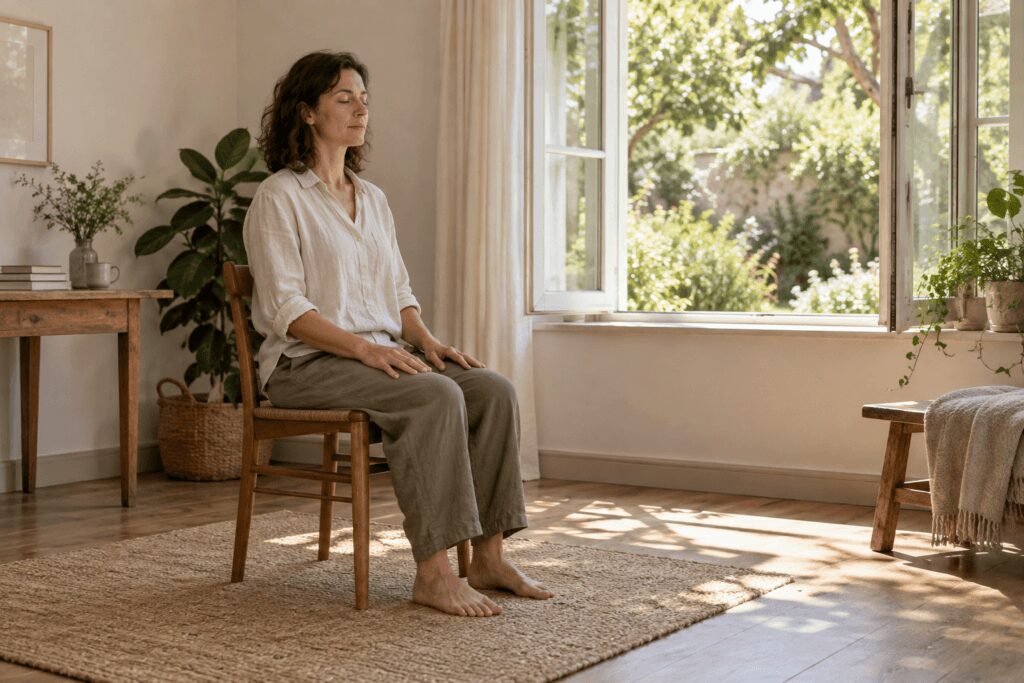
Choose a reasonably quiet place and set a gentle timer for five minutes. A chair is entirely suitable. Let your feet rest on the floor and your hands settle on your thighs or in your lap. If you prefer a cushion, use enough height to sit without straining.
Allow the spine to be comfortably upright. Soften the jaw and shoulders. There is no need to hold yourself in an impressive posture. Keep your eyes softly open or close them if that feels comfortable. Adjust your position whenever you need to; enduring pain is not the purpose of the practice.
Begin with the body and the room
Before focusing on anything subtle, notice the contact of your feet with the floor and the support of the chair or cushion. Feel the weight of your hands. Hear the sounds around you.
Let these sensations arrive without searching for the perfect one. A passing car or a bird outside need not interrupt meditation. It can simply be another sound that is heard. This first step is less about withdrawing from life than becoming available to it.
Let the breath be natural
Notice where breathing is easiest to feel: at the nostrils, in the movement of the chest, or in the abdomen. Choose one place as a gentle resting point for attention.
There is no need to breathe deeply, slow the breath, or hold it. Feel one inhalation and one exhalation as they happen. You are becoming acquainted with breathing, rather than managing it.
If attending to breathing feels uncomfortable, use the contact of your feet with the floor or the sounds in the room instead. The object of attention is a support, not a test.
Meet wandering attention without criticism
Sooner or later, you may find yourself planning dinner, replaying a conversation, or wondering whether you are doing this correctly. This is a moment to notice, not a reason to judge yourself.
You can quietly acknowledge “thinking” and return to the next breath or bodily sensation. There is no need to finish the thought or push it away. Each gentle return is part of the practice.
For example, you notice a shopping list forming in your mind. Recognize it, feel your feet again, and notice the next exhalation. That small movement from being absorbed in a thought to knowing it as a thought is enough for this moment.
Allow experience without having to follow it
As you become familiar with a simple resting point, you may occasionally let attention widen. Breath, sounds, sensations, and thoughts can be noticed together. Let experience change without requiring it to settle into a particular state.
Allowing a feeling to be present does not mean endorsing every thought or acting on every impulse. It means noticing what is here before deciding how to respond. If you become caught in a story, return to the feet, the hands, or a natural breath.
Within Advaita Vedanta and spiritual awakening, this listening can invite a further inquiry: a thought is known, a sensation is known—what is this knowing? Leave the question open rather than forcing a verbal answer. This inquiry is optional; beginners can stay with the simple practice of noticing and returning.
A five-minute meditation to try today
Read these suggestions once, then put the screen aside. The timings are approximate; there is no need to keep checking the clock.
First minute: settle into your seat. Feel the support beneath you and listen to the room. Let your shoulders soften.
Next two minutes: attend to natural breathing, or to your feet and hands. When thoughts carry attention away, acknowledge them and return gently.
Fourth minute: if comfortable, allow sounds, sensations, and thoughts to share your attention. Nothing needs to be excluded. Otherwise, continue with your chosen resting point.
Final minute: feel the body as a whole. Notice the room again, move your hands and feet, and take your time standing up. Let the practice end without grading it.
Common questions about meditation
Am I doing it wrong if my mind is busy?
A busy sitting is still an opportunity to notice. Meditation does not require the disappearance of thought. Start again with something immediate, such as the contact of your hands or the next breath.
How long should I meditate?
Begin with five minutes, or less if that feels more manageable. Choose a duration you can approach willingly. You can gradually sit longer, but the length of a session does not measure your worth or understanding.
What if I feel restless or uncomfortable?
Open your eyes, look around, change position, or stand and walk slowly. You can shorten or stop the session. There is no requirement to remain with an experience that feels overwhelming.
Should I expect peace every time?
Some sittings may feel quiet; others may feel ordinary or unsettled. Making calmness a condition of success adds another demand to the moment. Notice how you meet what appears, rather than asking every session to deliver the same feeling.
Bring meditation into everyday life
Choose a small, repeatable opportunity: after getting up, before lunch, or before opening your messages. Let the routine be simple enough to return to when you miss a day.
Outside formal sitting, pause before answering a question. Feel your feet while waiting for the kettle. Listen to someone without preparing your reply for a moment. These ordinary pauses bring the quality of meditation into relationship and activity.
The practice is not complete only when life becomes quiet. It continues in how you listen, respond, and meet the next moment. For a broader path of reflection, explore the seven-part BREATHE Framework.
Begin today with one comfortable seat and five unhurried minutes. Let the breath breathe. Notice what is here. When you wander, return with kindness.
Continue exploring meditation
For a closer inquiry into attention and identity, explore self-inquiry meditation. To bring this quality of attention into uncertainty, read Being Okay with Not Knowing Is a Living Meditation or watch James Traverse’s Not Knowing & Presence video. For more video reflections, visit the James Traverse Yoga channel.
If thoughts keep pulling your attention away, try meditating with a busy mind. For a focused sitting exercise, explore natural breath awareness meditation. To understand the difference between noticing and questioning, read Mindfulness and Self-Inquiry.
Continue in the BREATHE web app for seven contemplative parts and a private reflection space. The timed breath pacer is optional; you can continue to notice natural breathing.
Recommended Next Lesson
After trying this sitting, read Mindfulness and Self-Inquiry: What Is the Difference? to explore the move from noticing experience to questioning identity. For the wider context, return to the spiritual awakening guide.
Leave a Reply