Rooted in Advaita Vedanta, Being Yoga invites an inquiry into our true nature through embodied practice and everyday life. The teaching brings attention to the body, breath, and the habits through which we interpret experience.
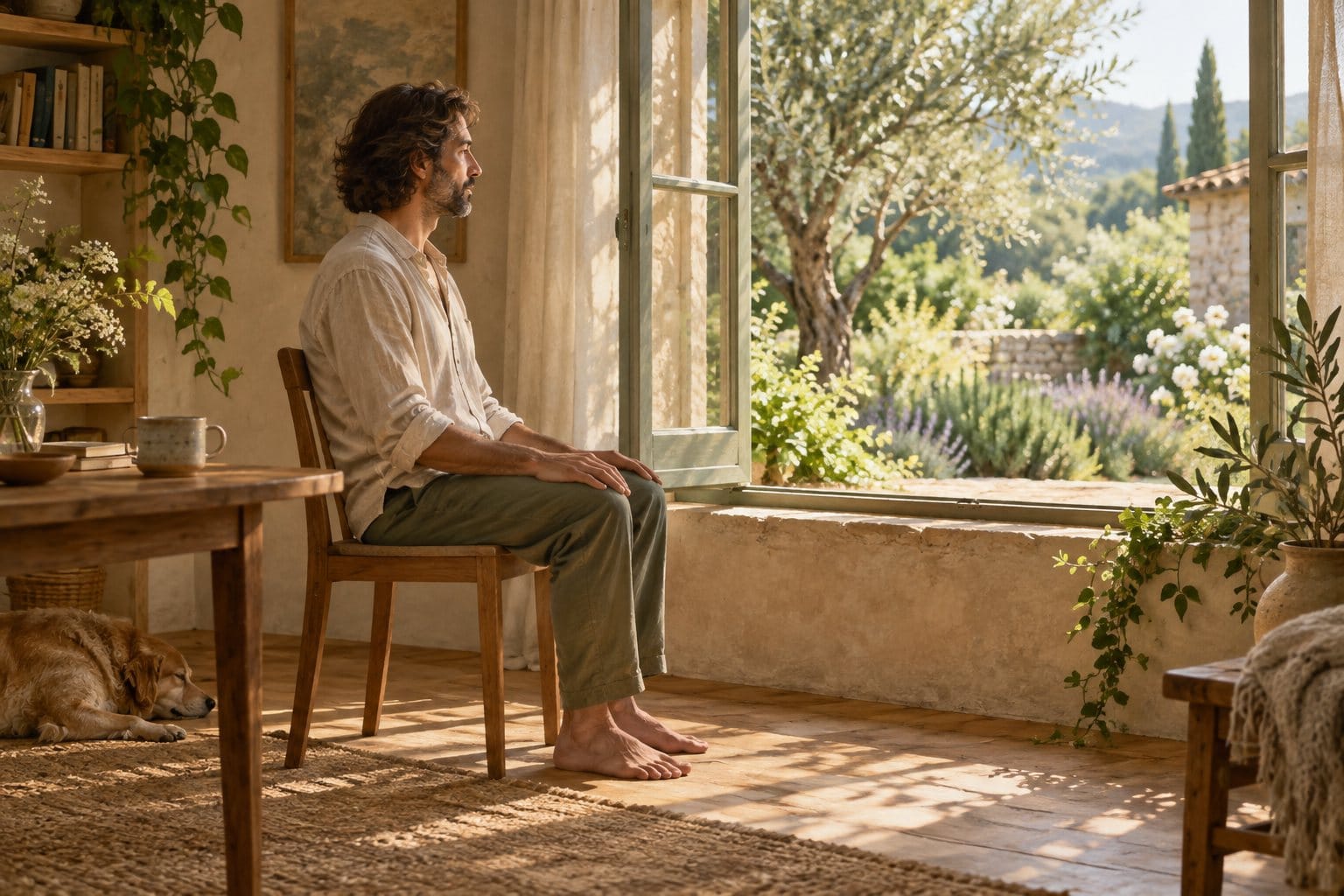
Being Yoga is the switch from ‘doing’ to ‘being’. It is the practice of yoga beyond the mat that brings listening and awareness into ordinary experience. A posture, a breath, a conversation, or a moment of uncertainty becomes an opportunity to notice what is present before naming it, judging it, or trying to change it.
The inquiry is simple: what do we discover when we meet experience directly, rather than only through our ideas about ourselves?
What does “being” mean in yoga?
In Being Yoga, being means meeting the present moment with listening and awareness. Doing remains part of life: we move, work, speak and care for one another. The shift concerns how we meet those activities. Can action arise from attention rather than an immediate demand to improve, defend or control experience?
You do not have to produce a special state or stop thinking. Notice a sound, the support beneath your feet, or the beginning of a reaction. This is a practical starting point for spiritual awakening through non-dual yoga: exploring the awareness in which experience is known.
What do we mean by our true nature?
Within the non-dual perspective taught here, our true nature points to the awareness through which sensations, thoughts and feelings are known. We usually describe ourselves through a name, a role, a history or an opinion. These descriptions have everyday uses, but inquiry asks whether they express the whole of what we are.
Rather than accepting a new definition, explore your experience. A thought about yourself appears and changes. A bodily sensation appears and changes. What knows these movements? The question “Who am I?” can remain open, without being resolved by another thought. Explore this further in the self-inquiry meditation guide.
In the Vedantic language of this teaching, Atman is Brahman. Knowing via Being points to recognition of this nonseparation through self-knowledge: wisdom that includes and transcends intellectual knowledge. For an introduction to the textual context, read Aparokshanubhuti: Direct Self-Realization.
The body as a place of inquiry
Embodied inquiry begins with the body you are experiencing now. Feel the contact of your feet with the floor, the weight of your hands, or the movement of your shoulders. Notice the difference between a sensation and the interpretation you place upon it.
In a comfortable yoga posture, you might notice tension followed by the thought “I should be better at this.” The tension is one experience; the judgment is another. Listen to both. Adjust the posture when needed. Inquiry does not require enduring pain or maintaining an impressive shape.
Movement can become a conversation with sensation. What happens when you allow time to feel before moving further? Where is effort useful, and where has it become habitual? These questions bring yoga beyond the mat into sitting, walking and ordinary work.
Breath and attention
In Being Yoga’s teaching, watching the breath changes it quantitatively and qualitatively: as you watch, the breath slows and becomes deeper. Attend gently to the movement of breathing rather than demanding a particular rhythm.
When you choose to regulate the breath, begin by comfortably lengthening the exhalation. Allow the inhalation to follow naturally and deepen into the space made by breathing out. You do not need to pull in a larger breath, force the exhalation or hold the breath. Let comfort guide the practice; return to ordinary breathing whenever needed.
For a fuller exploration, read breath awareness meditation. The BREATHE web app also offers an optional pacer using INHALE, PAUSE, EXHALE, PAUSE, alongside contemplative inquiry and a private reflection space.
Notice the habits through which we interpret experience
An experience and our explanation of it are closely woven together. Someone pauses before replying, and we may immediately assume disapproval. A posture feels unfamiliar, and we may label ourselves inflexible. A thought arrives, and we may take it as a reliable account of who we are.
Being Yoga invites a pause within this movement. What was actually sensed or heard? What meaning did I add? Can I remain available to what is happening while allowing my first explanation to be incomplete?
This does not remove the need for judgment or responsibility. It creates room to respond with greater attention. For examples through posture, thought and conversation, read inner transformation through spiritual yoga.
Try inquiry in an everyday conversation
Begin with one ordinary conversation. Feel the support beneath your feet and listen to the other person’s words. Notice when you begin preparing a reply while they are still speaking.
Allow a brief pause before answering. You do not have to suppress your response. Simply notice the body, the impulse to speak, and what you actually heard. Ask yourself: “Am I responding to this person, or to the story I have already formed?”
Afterward, reflect without grading yourself. Was there a moment of listening? Did an assumption become visible? This small exploration connects embodied practice with care in relationship. Continue with The Yoga of Listening.
How the seven-part BREATHE Framework supports inquiry
The BREATHE Framework — Breath IS Bridge gives seven connected themes for exploring identity, interpretation and recognition: Being Misidentified, Reality Misread, Error Experienced, Assimilating Knowledge, Truth Recognized, Halting Identification, and Enduring Freedom.
These parts offer starting points for contemplation rather than a timetable or a ranking of people. You can explore them in the BREATHE practice app and bring a relevant question into your day.
Begin with a simple practice
Take a comfortable seat for a few minutes. Feel the support beneath you. Hear the room. Notice breathing, sensation and thought without requiring them to disappear. Let the question of who you are remain a living inquiry.
For step-by-step guidance, begin with How to Meditate. For a video reflection, watch Not Knowing & Presence.
Why? Why study all this?
For peace of mind, lasting contentment and well-being. The point is self-knowledge, finding expression in how we listen, relate, act and meet change. Read the purpose of the inquiry on the About page.
Explore Being Yoga with James Traverse
James Traverse is a yoga educator and writer in Halifax, Nova Scotia, with more than 50 years of yoga experience. His teaching draws on his study with Jean Klein and explores listening, meditation and self-inquiry. Read about his background and teaching approach, or explore Being Yoga sessions.
Being Yoga begins here: feel, listen and notice. Let ordinary life become a place where inquiry is lived.