
The yoga of transformation concerns how practice and understanding enter a life. A familiar reaction may become easier to see. A conversation may have more room for Listening. An action may be taken with care, without requiring its outcome to establish who we are.
In my teaching, practice prepares attention, inquiry reveals an error of misidentification, and understanding finds expression in ordinary living. What you truly are and how you appear are not-two. The Being Yoga guide to spiritual awakening introduces this perspective; here we explore its expression in action, devotion, meditation and self-knowledge.
Preparation, recognition and assimilation
Preparation can unfold over time. We learn to listen, notice an assumption, examine a doubt and remain available to a question. Body-feeling and meditation give immediate occasions for this exploration. A comfortable posture, natural breathing and a moment of undivided attention are enough to begin.
Recognition concerns seeing the error in taking a limited appearance to be the whole of what you are. It is the nature of an error to cease once seen. Awareness is already present; a practice does not manufacture it. Insight may be immediate, while listening, reflection and the expression of understanding continue in daily life.
Assimilation brings the teaching into situations where an old conclusion once operated unnoticed. You may understand a point in a quiet conversation with a teacher and discover another doubt at work. Return to the question. The situation offers a place for understanding to become clear and lived.
Action: work carefully and welcome the result
Consider preparing a meal for someone. You choose the ingredients, attend to what is needed and offer what you have made. Their response may differ from what you expected. Can you receive it without turning the encounter into a judgment about your worth?
Karma Yoga invites care in action and an examination of attachment to results. This includes ordinary duties: replying to a difficult message, keeping a commitment or repairing a mistake. Take responsibility for what you can do, while recognizing that a result also depends on circumstances beyond your control.
A useful inquiry is, “What does this situation ask of me, and what am I demanding that the outcome prove?” That question can reveal the difference between doing a task well and using it to secure an identity.
Devotion: allowing life to matter
Devotion has a place in receiving as well as offering. A person, a landscape, a prayer or a work of art can invite attention that is less occupied with getting something for ourselves. Let the encounter matter on its own terms.
Bhakti Yoga gives expression to love, devotion and surrender. In the language of my teaching, Welcoming is Love Lived. It may appear as staying with a grieving friend, hearing a child’s question or accepting help when you need it. The openness has a practical expression.
Meditation: Listening without a demand for silence
Sit comfortably and hear the room. Feel the body and allow breathing to happen. Thought may continue. Include the movement of thought in what is known rather than turning meditation into an argument with it.
Meditative absorption, often discussed through the term samadhi, and the Advaita inquiry into Self-knowledge need to be understood in their respective contexts. A collected or quiet mind can support inquiry. The recognition that Atman is Brahman concerns what is true through changing states of experience.
For a fuller treatment of the classical practice framework, read the eight limbs of yoga. For something immediate, begin with a simple meditation exploration.
Self-knowledge: examine the meaning of “I”
Jnana Yoga includes listening to the teaching, examining doubts and assimilating understanding. Reasoning helps clarify an assumption, and the inquiry concerns the one to whom every thought and argument appears. Knowing via Being gives this inquiry its living meaning.
A role can be useful: teacher, parent, colleague or friend. Notice what happens when its description becomes an absolute statement about you. “I made a mistake” can turn into “I am a failure.” See the added conclusion and attend to the action that actually needs attention.
In self-inquiry meditation: Who am I?, changing experiences are examined in the light of the awareness through which they are known. Listening to a teacher and asking sincere questions can help reveal where a familiar interpretation has become an unquestioned identity.
One encounter can include all these approaches
Imagine that someone disagrees with you. Action asks for an honest response. Devotion allows the person to matter beyond being an opponent. Meditation gives room to hear the words and feel your response. Inquiry notices the “me” that seems to require defending.
You can explore these together without trying to perform four separate techniques. For a fuller account of their relationship in my teaching, read The Four Yogas: Listening, Beauty, Love and Truth.
An exploration for today
Choose one ordinary activity and give it your attention. Feel your hands while washing a cup. Listen when someone speaks. Before answering a message, notice what you are assuming about the sender. Welcome what is actually present and let the needed action become clear.
Later, reflect on one specific moment: what was heard, what was assumed, and what changed when the assumption was seen? This makes reflection concrete. Continue with a short daily practice or yoga beyond the mat.
Continue with practice and study
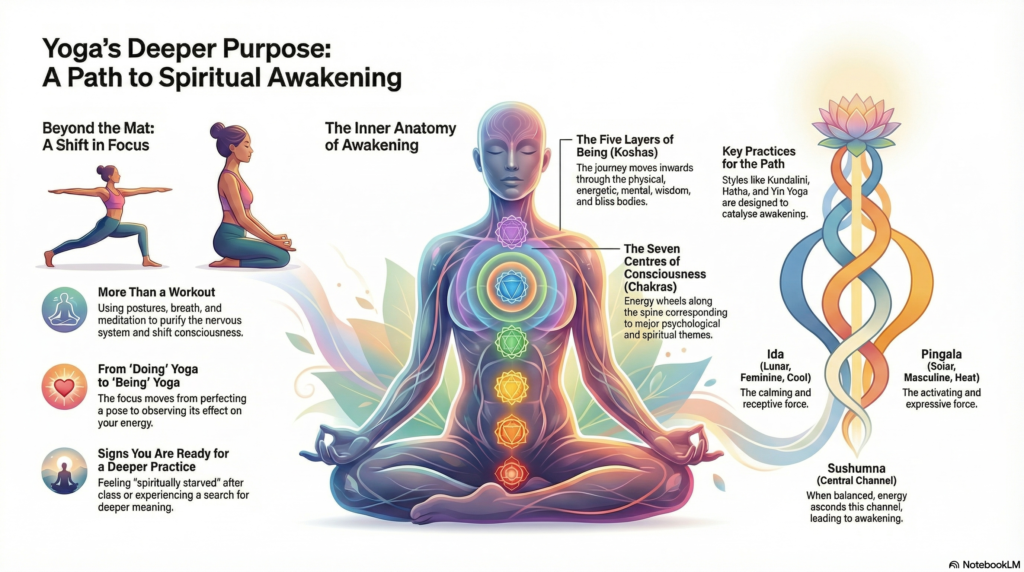
The companion below offers further material for exploring yoga beyond physical exercise. Bring questions from your practice into study and conversation. My Teaching explains how Listening, Welcoming and self-knowledge come together in Being Yoga.
Listen with your whole being. What you truly are and how you appear are not-two.
Leave a Reply