Table of Contents
- Introduction: The Bridge of Breath
- Understanding Prana: Life Force as Energy-Flow
- The Body-Mind Continuum
- Breathing as the Fundamental Link
- Meditation and Breathwork
- Breathing Techniques for Mind-Body Integration
- Spiritual Awakening Through Breath
- Accessing Another Way of Knowing
- Key Takeaways
- FAQ
- Summary
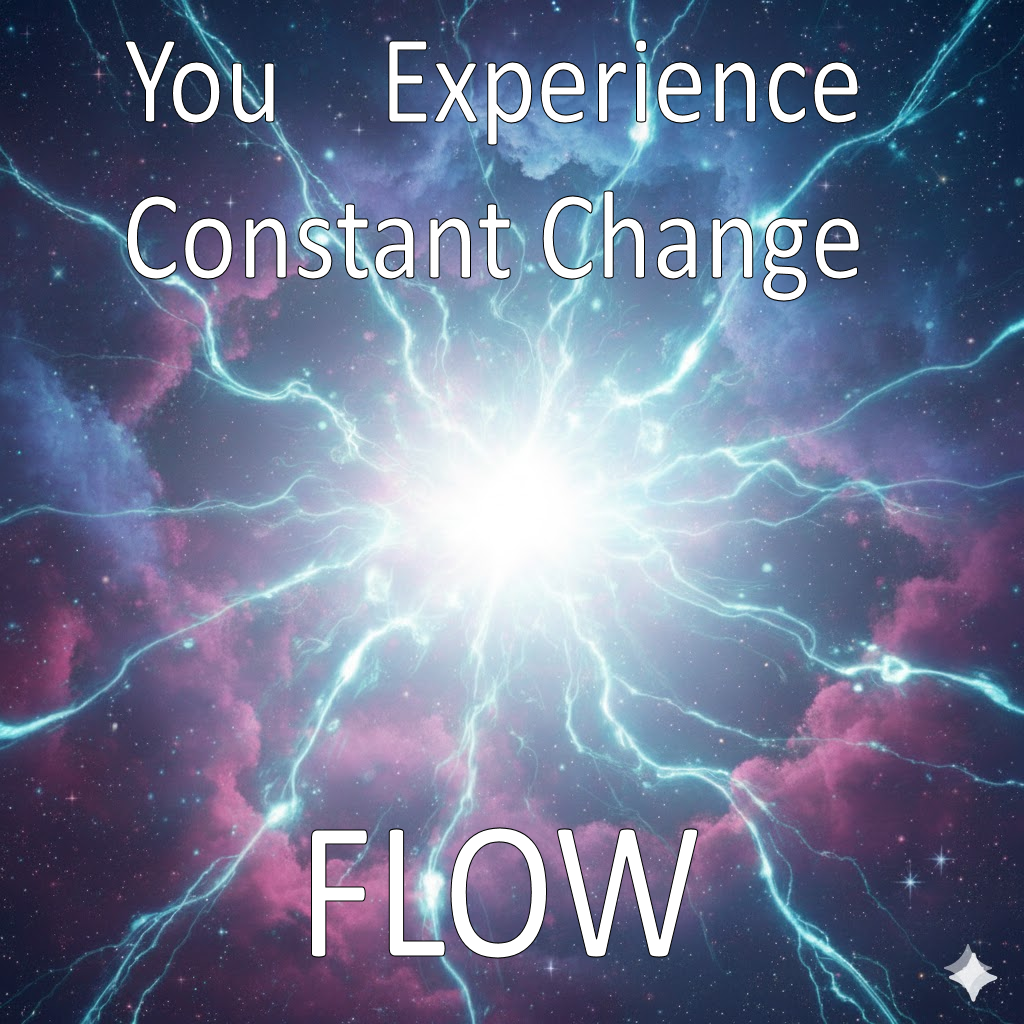
Constant Change is so obvious that it is overlooked,
yet it is Highly Significant as you will see below.
Introduction: The Bridge of Breath
Breathing is far more than a biological necessity—it is the fundamental manifestation of life force energy that connects our physical body with our mental and spiritual dimensions. In ancient Eastern philosophies, this life force is called Prana, and it represents the continuous flow of energy that animates all living beings.
Why Breathing Matters
- Autonomic yet controllable: Breathing operates automatically but can be consciously controlled
- Physical and metaphysical: Bridges the tangible body with the intangible mind
- Universal and personal: Connects us to the universe while being intimately our own
- Present-moment anchor: Always available as a tool for awareness and transformation
1. The Gas Exchange (The Hand-off)
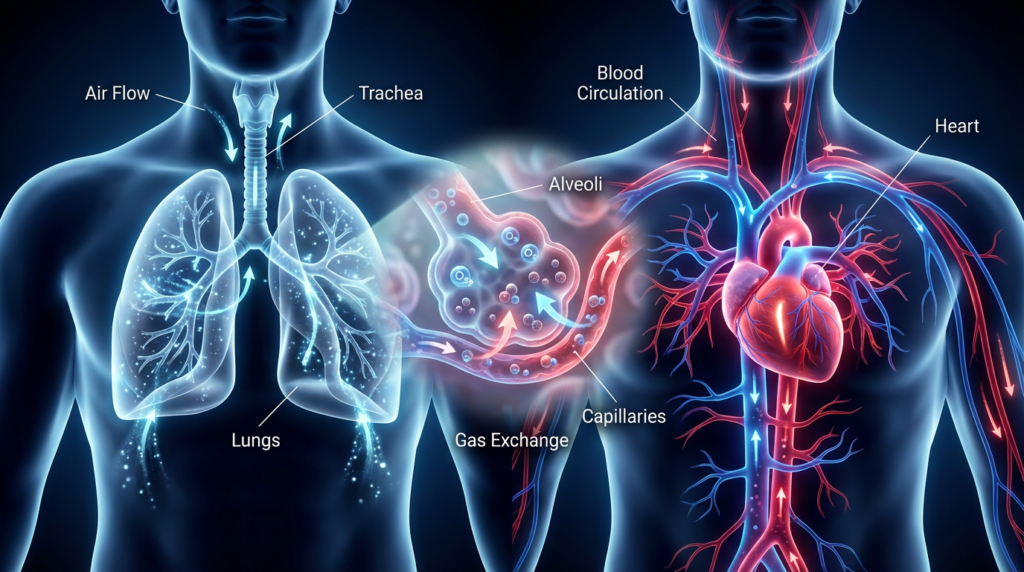
When you inhale, air flows into tiny sacs in your lungs called alveoli. This is where breath flow meets blood flow. Oxygen from the air passes through incredibly thin walls into your capillaries, where it is picked up by red blood cells. Simultaneously, carbon dioxide—a waste product from your cells—moves from the blood back into the lungs to be exhaled
2. Pressure and Circulation
Breathing actually acts as a physical pump for your blood. When you inhale, the pressure in your chest cavity drops. This vacuum-like effect doesn’t just pull air into your lungs; it also helps pull blood back toward the heart, improving circulation.
3. The Nervous System Connection
Your breath is a remote control for your heart rate. Slow, deep “belly breathing” stimulates the vagus nerve, which signals your heart to slow down and your blood vessels to relax. This is why controlled breathing is such a powerful tool for lowering blood pressure and reducing stress.
4. Energy Production
Ultimately, breath flow and blood flow exist to serve your cells. Blood flow delivers the oxygen (from your breath) and nutrients to your tissues, where they are used to create the energy that keeps your form alive.
Prana: Life Force as Energy-Flow
What is Prana?
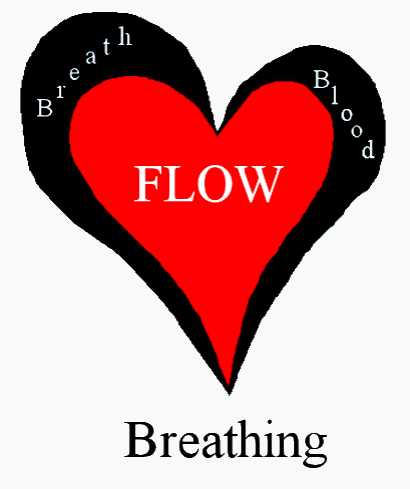
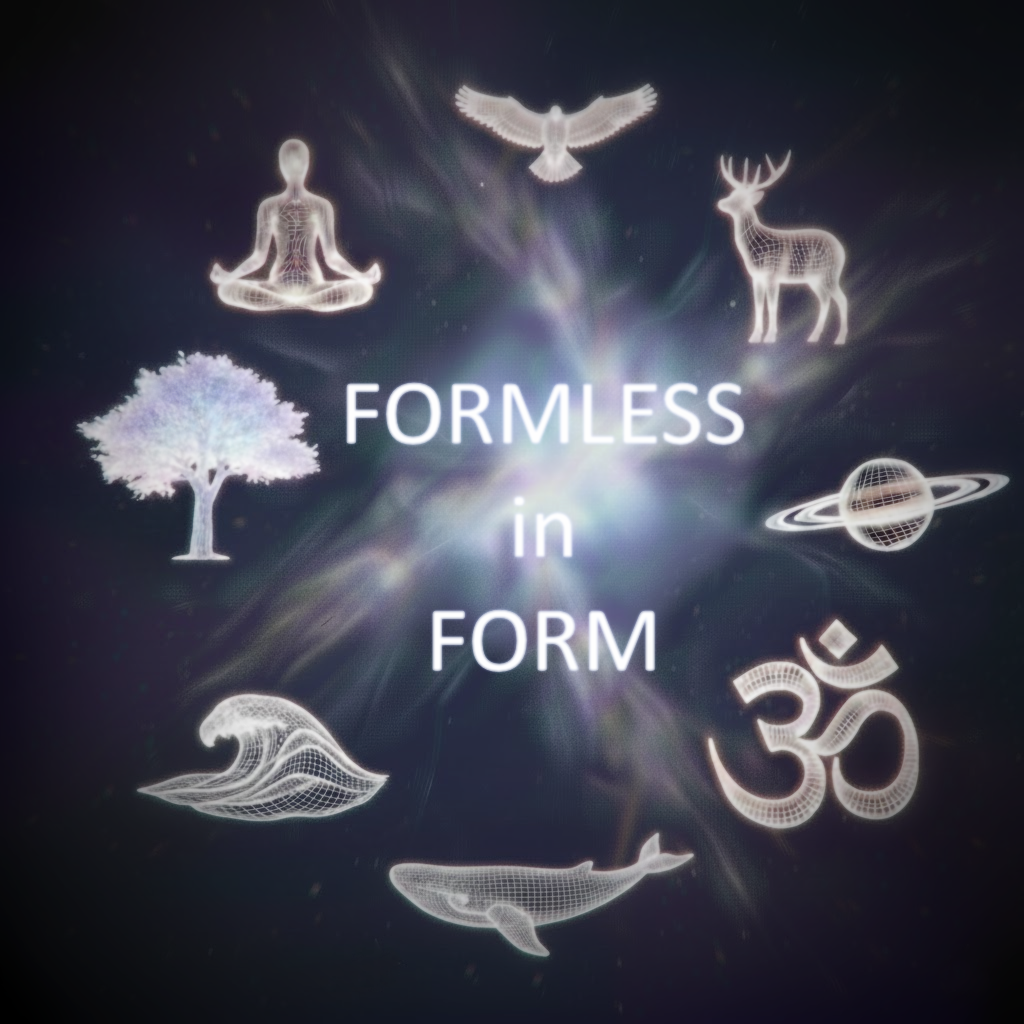
Prana is Flow. Constant Change – the most obvious example of the fact that Prana is Flow is the constant change common to all experience. Prana is the eternal now – Time.
Prana is Life Force. Like electricity that animates electrical devices, Prana is the Life Force that animates and is all things. Prana is the aliveness of being – Space.
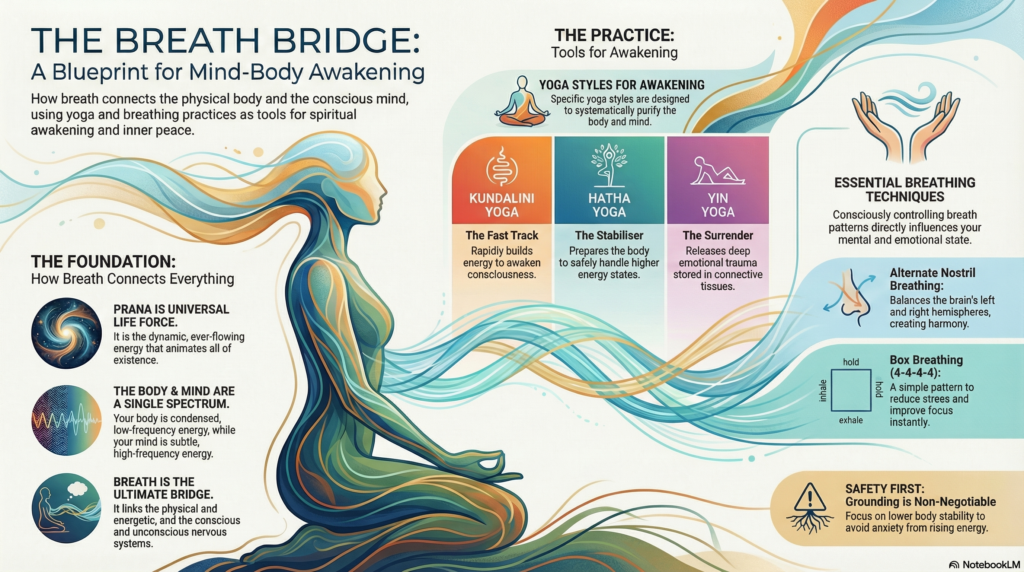
Prana is Energy. In Sanskrit, Prana (प्राण) literally means “life force” or “vital energy.” It is not a static substance but rather a dynamic, ever-flowing current that:
- Permeates all existence
- Sustains biological processes
- Connects consciousness with matter
- Flows through specific pathways (nadis) in the body
- Responds to thought, emotion, and intention
- The Field of All Possibilities
Prana: the Breath within the Breath
Flow In and Out of Form: The Nature of Energy-Flow
| Aspect | Description |
|---|---|
| Universal Energy | Prana exists everywhere in the cosmos, flowing through and as all living and non-living things |
| Individual Energy | Each being contains a unique expression of this universal flow |
| Breath as Carrier | Breathing is the primary vehicle through which prana enters and circulates in the body |
| Mind as Director | Consciousness can direct and influence the flow of prana through awareness |
| Matter as Manifestation | Physical form represents condensed, crystallized energy-flow |
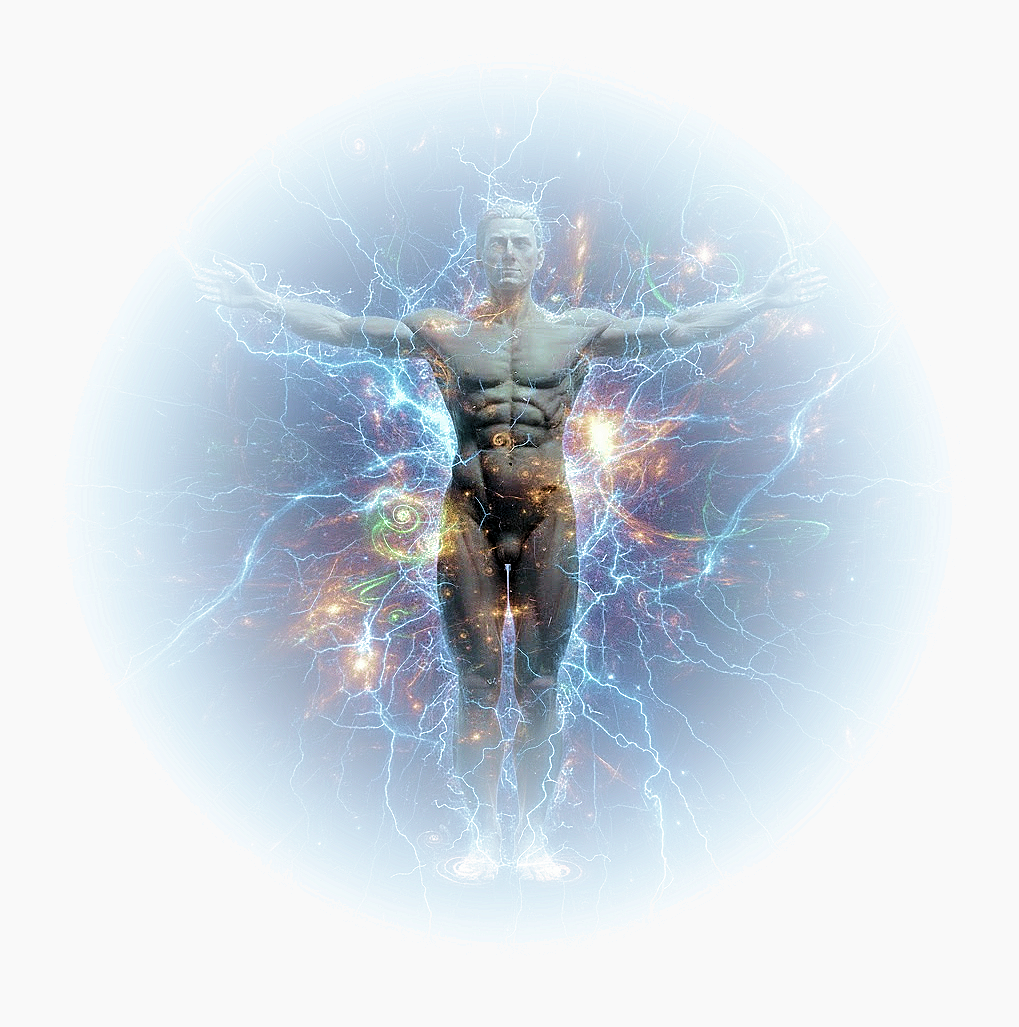
- The Breath of Life: Prana is most commonly experienced via the breath. Just as you cannot hold your breath forever, Prana must flow in and out to sustain life, representing the cycle of receiving and releasing.
- Energy in Motion: The Sanskrit root of Prana implies ‘constant motion.’ It governs everything from the circulation of your blood to the firing of neurons in your brain. When this flow is blocked, stagnation occurs; when it is open, you experience vitality.
- Adaptability: Like a river, Prana flows in and around obstacles. Seeing it as ‘constant change’ helps us understand that our energy, moods, and physical states are never static—they are part of a larger, shifting current, a continuous stream of energy!
Time and Space
- Time: Time is the description of Prana in Form.Time is the description and measure of constant change. Thought is Time.
- Space: The Field of All Possibilities. Space is Prana out of Form. Space is unmanifested potential; it is the intelligent ‘felt’ presence of being. Feeling is Space.
Time as the Seen: Because Time tracks the transformation of matter, it is the record of Prana’s journey through physical structures. It is the ‘story’ of the form.
Space as the Felt: This is the experience of ‘presence’ or ‘stillness.’ While we see objects (Time/Form), we feel the vastness and the silence (Space/Potential) that holds them.
Another word for Prana is Love
Prana is Love. The ‘constant change’ we see in the world isn’t just a mechanical process—it is the movement of Love itself.
- Love (Prana): The fundamental life force and the ‘why’ behind all existence.
- Time: Love taking on a visible story or Form (the seen).
- Space: Love in its pure, unmanifested Potential, guided by intelligence to create order (the felt).
Prana or the ‘Time-Space’ of the universe is an act of devotion-creation. Its ‘inherent intelligent nature’ is not cold or mathematical, but a compassionate force that organizes chaos into the beauty and order we experience. The study of the universe and one’s true nature is actually the study of the heart.
Breathing: The Most Fundamental Manifestation of Flow
Among all bodily processes, breathing most directly represents the principle of flow:
- Rhythmic oscillation: Inhalation and exhalation create a continuous wave pattern
- Exchange with environment: Constant interaction between inner and outer worlds
- Life-sustaining: Without breath, the energy-flow stops and life ceases
- Immediately responsive: Breath patterns change instantly with mental-emotional states
- Gateway to prana: Each breath draws in not just air, but vital life force
The Body-Mind Continuum: Extreme Forms of the Same Thing
Beyond the Dualistic Illusion
Traditional Western thought has long separated body and mind into distinct categories. However, both body and mind are extreme forms of the same fundamental reality: Energy-Flow. The clearest example of this is you.
The Body as Condensed Energy
- Dense vibration: Physical matter represents energy vibrating at lower frequencies
- Structured flow: Cells, tissues, and organs are organized patterns of energy
- Biochemical processes: All bodily functions are energy transformations
- Electromagnetic field: The body generates measurable energy fields
The Mind as Subtle Energy
- High-frequency vibration: Thoughts and consciousness operate at higher vibrational rates
- Formless flow: Mental phenomena are energy patterns without physical density
- Neurological correlates: Brain activity shows measurable electromagnetic patterns
- Intention as force: Focused attention can direct and influence energy
The Spectrum of Energy-Flow

Energy-In-Formation
Key Insight: Body and Mind are not separate entities but exist on a continuum of energy density. What we call “body” is simply more condensed energy-flow; what we call “mind” is more refined energy-flow.
Breathing as the Fundamental Link
Why Breath is the Perfect Bridge
Breathing occupies a unique position in human physiology and consciousness:
1. Dual Nature: Voluntary and Involuntary
- Autonomic function: Continues automatically without conscious effort (controlled by the brainstem)
- Conscious control: Can be deliberately regulated through will and attention
- Bridge between systems: Connects the voluntary and involuntary nervous systems
2. Physical and Energetic Dimensions
- Material level: Exchanges oxygen and carbon dioxide (biochemistry)
- Energetic level: Circulates prana throughout the subtle energy system
- Measurable and immeasurable: Has both quantifiable and subjective qualities
3. Immediate Mind-Body Feedback Loop
| Mental/Emotional State | Breathing Pattern | Physical Response |
|---|---|---|
| Anxiety, fear, stress | Rapid, shallow, irregular | Increased heart rate, muscle tension, cortisol release |
| Calm, peace, relaxation | Slow, deep, rhythmic | Decreased heart rate, muscle relaxation, endorphin release |
| Focus, concentration | Steady, controlled | Enhanced oxygenation, improved cognitive function |
| Anger, frustration | Quick, forceful | Elevated blood pressure, adrenaline surge |
| Joy, excitement | Full, expansive | Increased energy, dopamine release |
4. Gateway to the Nervous System
- Sympathetic activation (fight-or-flight): Triggered by rapid breathing
- Parasympathetic activation (rest-and-digest): Induced by slow, deep breathing
- Vagus nerve stimulation: Deep breathing directly activates the body’s calming mechanisms
- Neurotransmitter regulation: Breath patterns influence serotonin, GABA, and other mood chemicals
5. Present-Moment Anchor
- Always in the now: Breath only exists in the present moment
- Meditation foundation: Most contemplative practices use breath as a focus point
- Thought interruption: Conscious breathing disrupts automatic mental patterns
- Awareness cultivation: Observing breath develops mindfulness skills
Meditation and Breathwork: Cultivating Conscious Connection
The Role of Breath in Meditation
Meditation practices across traditions—Buddhist, Hindu, Taoist, Sufi—universally recognize breath as the primary tool for mind-body integration.
Why Meditation Uses Breath
- Accessible focal point: Always available, requires no equipment
- Neutral object: Non-conceptual, pre-verbal, direct experience
- Self-regulating: Observing breath naturally calms and steadies it
- Depth indicator: Breath quality reflects meditation depth
- Energy amplifier: Concentrated awareness on breath intensifies prana
Meditation Approaches to Breath
1. Breath Awareness (Anapanasati)
- Simply observe the natural breath without controlling it
- Notice sensations at the nostrils, chest, or abdomen
- Develops sustained attention and equanimity
- Foundation of Buddhist mindfulness practices
2. Breath Counting
- Count each exhalation from 1 to 10, then repeat
- Helps stabilize wandering mind
- Provides immediate feedback when attention lapses
- Zen and Taoist practices commonly use this method
3. Breath Following
- Track the entire journey of each breath
- Feel the inhalation enter, pause, exhalation release, pause
- Cultivates intimate awareness of energy movement
- Reveals the subtle space between breaths
4. Mantra with Breath
- Coordinate sacred syllables with breathing rhythm
- “So-Ham” (I am That): “So” on inhale, “Ham” on exhale
- Combines sound vibration with breath energy
- Vedantic and yogic traditions emphasize this integration
Breathing Techniques for Mind-Body Integration
Scientific and Spiritual Approaches
Modern research confirms what ancient practitioners knew: specific breathing patterns create specific physiological and psychological states.
Popular Breathing Techniques
1. Box Breathing (4-4-4-4)
Pattern: Inhale 4 counts → Hold 4 counts → Exhale 4 counts → Hold 4 counts
Benefits:
- Reduces stress and anxiety
- Improves focus and concentration
- Balances nervous system
- Used by Navy SEALs and athletes
Best for: Stress management, performance enhancement, quick centering
2. 5-7-5 Breathing (Relaxation Technique)
Pattern: Inhale 5 counts → Hold 7 counts → Exhale 5 counts
Benefits:
- Activates parasympathetic nervous system
- Promotes deep relaxation
- Enhances oxygen absorption during retention
- Calms racing thoughts
Mechanism: The longer retention allows more efficient gas exchange and triggers the body’s relaxation response.
Best for: Bedtime preparation, anxiety relief, nervous system regulation
3. 4-7-8 Breathing (Dr. Andrew Weil’s Technique)
Pattern: Inhale 4 counts → Hold 7 counts → Exhale 8 counts
Benefits:
- Induces rapid relaxation
- Helps with sleep onset
- Reduces anxiety
- Lowers blood pressure
Best for: Insomnia, panic attacks, general stress relief
4. Alternate Nostril Breathing (Nadi Shodhana)
Pattern:
- Close right nostril, inhale through left
- Close left nostril, exhale through right
- Inhale through right
- Close right nostril, exhale through left
- Repeat cycle
Benefits:
- Balances left and right brain hemispheres
- Clears energy channels (nadis)
- Harmonizes masculine/feminine energies
- Enhances mental clarity
Best for: Meditation preparation, energy balancing, mental clarity
5. Coherent Breathing (Resonant Frequency)
Pattern: Breathe at 5-6 breaths per minute (approximately 5-6 second inhale, 5-6 second exhale)
Benefits:
- Optimizes heart rate variability
- Maximizes autonomic nervous system balance
- Reduces stress hormones
- Improves emotional regulation
Best for: Long-term stress resilience, cardiovascular health, emotional balance
6. Breath of Fire (Kapalabhati)
Pattern: Rapid, forceful exhalations through nose with passive inhalations
Benefits:
- Energizes and awakens
- Clears respiratory system
- Stimulates digestive fire (agni)
- Purifies subtle energy channels
Caution: Not suitable for pregnancy, high blood pressure, or heart conditions
Best for: Morning practice, energy boost, cleansing
Comparison Table: Breathing Techniques
| Technique | Duration | Primary Effect | Energy Quality | Best Time |
|---|---|---|---|---|
| Box Breathing (4-4-4-4) | 5-10 min | Balance, focus | Neutral, stabilizing | Anytime, especially stressful moments |
| 5-7-5 Breathing | 5-15 min | Relaxation, calm | Cooling, settling | Evening, before meditation |
| 4-7-8 Breathing | 3-5 min | Deep relaxation, sleep | Very calming | Bedtime, anxiety moments |
| Alternate Nostril | 5-10 min | Balance, clarity | Harmonizing | Morning or pre-meditation |
| Coherent Breathing | 10-20 min | Resilience, regulation | Balancing | Daily practice |
| Breath of Fire | 3-5 min | Energy, purification | Heating, activating | Morning |
Spiritual Awakening Via Breath
The Breath as Portal to Higher Consciousness
Spiritual awakening refers to the direct recognition of one’s true nature beyond the limited ego-self. Breathing practices serve as a gateway to this expanded awareness.
How Breath Facilitates Awakening
1. Dissolving the Ego Boundary
- Normal state: We identify with thoughts, sensations, and stories
- Breath awareness: Shifts attention from content to process
- Recognition: “I am not my thoughts; I am the awareness observing them”
- Opening: The separate self begins to dissolve into spacious presence
2. Accessing Non-Dual Awareness
- Dual consciousness: Subject (me) observing object (breath)
- Non-dual shift: Observer and observed merge into unified awareness
- Pure being: Breath breathes itself; no separate “breather” exists
- Liberation: Recognition of consciousness as primary reality
3. Kundalini Awakening (Energy Activation)
In yogic traditions, Kundalini represents dormant spiritual energy at the base of the spine:
- Pranayama practices: Specific breathing techniques activate this energy
- Rising through chakras: Energy ascends through subtle energy centers
- Consciousness expansion: Each chakra opening brings new levels of awareness
- Integration: Physical, emotional, mental, and spiritual dimensions align
4. Samadhi States (Meditative Absorption)
Advanced breath practices can lead to Samadhi—states of unified consciousness:
- Savikalpa Samadhi: Absorption with subtle awareness of technique
- Nirvikalpa Samadhi: Complete dissolution of subject-object duality
- Sahaja Samadhi: Permanent establishment in awakened awareness
Signs of Spiritual Opening Through Breathwork
- Enhanced perception of energy fields and subtle sensations
- Spontaneous insights and intuitive knowing
- Emotional releases and cathartic experiences
- Sense of connection with all beings
- Altered perception of time and space
- Experiences of light, energy, or presence
- Deep inner peace independent of circumstances
Accessing Another Way of Knowing
Beyond Rational Mind: Intuitive Intelligence
Modern culture predominantly values rational, analytical thinking—processing information through logic, language, and linear reasoning. However, breathwork opens access to another way of knowing: direct, intuitive, experiential wisdom.
Two Modes of Knowing
| Rational Knowing | Intuitive Knowing |
|---|---|
| Method: Analysis, logic, reason | Method: Direct perception, feeling, sensing |
| Language: Words, concepts, symbols | Language: Pre-verbal, immediate, holistic |
| Location: Left brain hemisphere dominance | Location: Right brain hemisphere, heart coherence |
| Quality: Sequential, linear, divisive | Quality: Simultaneous, non-linear, unifying |
| Example: “I think, therefore I know” | Example: “I am, therefore I know” |
How Breathing Activates Intuitive Intelligence
1. Quieting the Conceptual Mind
- Conscious breathing interrupts the constant mental chatter
- Attention shifts from thinking about to direct experiencing
- Space opens between thoughts where insight arises
- The “beginner’s mind” becomes accessible
2. Heart-Brain Coherence
Research from the HeartMath Institute shows:
- Coherent breathing synchronizes heart rhythms with brain waves
- Heart intelligence: The heart has its own neural network (40,000 neurons)
- Electromagnetic field: The heart’s field is 5,000 times stronger than the brain’s
- Intuitive perception: Heart coherence enhances access to intuitive information
3. Activating the Right Hemisphere
- Left brain: Logic, language, analysis, separation
- Right brain: Patterns, wholeness, creativity, connection
- Deep breathing: Shifts dominance toward right hemisphere functioning
- Holistic awareness: Sees relationships, patterns, and interconnections
4. Somatic Intelligence (Body Wisdom)
The body knows things the mind cannot grasp:
- Gut feelings: Enteric nervous system provides direct knowing
- Physical sensations: Body responds to truth before mind conceptualizes
- Energy awareness: Felt sense of situations beyond logical assessment
- Cellular memory: Body holds wisdom from ancestral and personal experience
Cultivating Another Way of Knowing
Practices to develop intuitive intelligence:
- Body scanning: Feel sensations without interpreting them
- Heart-centered breathing: Focus breath awareness in the heart area
- Silence and spaciousness: Allow gaps between breaths and thoughts
- Nature connection: Breathe with natural rhythms (waves, wind, bird songs)
- Dream work: Notice insights arising in liminal states
- Spontaneous movement: Let breath guide body movement without planning
Inner Peace: The Foundation of True Knowing
Inner peace is not merely the absence of agitation but the presence of deep stillness from which clear perception arises.
The Breath-Peace Connection
- Calm breath = calm mind: Slow, rhythmic breathing directly induces peaceful states
- Peaceful mind = clear perception: Without mental turbulence, reality becomes transparent
- Clear perception = right action: Actions arising from peace are aligned and effective
- Right action = harmonious life: Life flows with less resistance and more grace
Accessing Inner Peace Through Breath
- Establish regular practice: 10-20 minutes daily of conscious breathing
- Create sacred space: Quiet environment free from distractions
- Adopt comfortable posture: Sitting upright with spine aligned
- Follow natural rhythm: Don’t force; allow breath to find its own pace
- Return gently: When mind wanders, softly return attention to breath
- Integrate throughout day: Brief breath awareness during daily activities
Key Takeaways
✅ Another word for Prana is Love
✅ Thought is Time.
✅ Feeling is Space.
✅ Prana is Energy-Flow: Life force is not a substance but a dynamic current flowing through all existence
✅ Breathing Manifests Flow: Breath is the most direct, accessible expression of prana in daily life
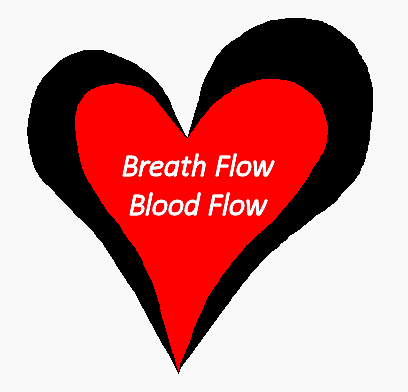
✅ Breathing is Breath Flow and Blood Flow
✅ Body-Mind Unity: Physical and mental phenomena are different densities of the same energy-flow continuum
✅ Breath is the Bridge: Breathing uniquely connects voluntary and involuntary systems, matter and consciousness
✅ Conscious Control Creates Change: Deliberate breathing patterns directly influence nervous system, emotions, and mental states
✅ Techniques for Transformation: Specific methods like 5-7-5, box breathing, and alternate nostril breathing offer practical tools
✅ Meditation Foundation: Breath awareness is the cornerstone of most contemplative practices worldwide
✅ Spiritual Gateway: Advanced breathwork can catalyze awakening and expanded consciousness
✅ Intuitive Intelligence: Breathing accesses non-rational ways of knowing beyond conceptual mind
✅ Inner Peace is Accessible: Regular breath practice cultivates lasting peace independent of external circumstances
People Also Ask Regarding: Breathing is the Link Between the Body and the Mind
Q1: How long should I practice breathing techniques to see benefits?
A: Benefits appear on multiple timelines:
- Immediate (seconds to minutes): Stress reduction, mental clarity, emotional regulation
- Short-term (days to weeks): Improved sleep, better focus, reduced anxiety
- Long-term (months to years): Increased resilience, spiritual insights, sustained inner peace
Start with 5-10 minutes daily and gradually increase. Consistency matters more than duration.
Q2: Can breathing techniques replace medical treatment for anxiety or other conditions?
A: Breathing techniques are powerful complementary practices but should not replace professional medical care. They work excellently alongside therapy, medication, and other treatments. Always consult healthcare providers for serious mental or physical health conditions.
Q3: What’s the best breathing technique for beginners?
A: Simple breath awareness is ideal for beginners:
- Sit comfortably with eyes closed
- Notice your natural breathing without changing it
- Feel sensations at nostrils, chest, or belly
- When mind wanders, gently return attention to breath
- Practice 5-10 minutes daily
Once comfortable, explore structured techniques like 4-4-4-4 box breathing or 5-7-5 relaxation breathing.
Q4: Is it normal to feel emotional or experience unusual sensations during breathwork?
A: Yes, completely normal. Breathing practices can:
- Release stored emotional tension
- Surface unconscious material
- Create energetic sensations (tingling, warmth, pressure)
- Trigger temporary anxiety before deep relaxation
- Induce altered states of consciousness
These are signs of energy movement and clearing. If overwhelming, reduce intensity, breathe naturally, or seek guidance from experienced teachers.
Q5: How does breathing relate to chakras and energy centers?
A: In yogic anatomy:
- Breath carries prana through energy channels (nadis)
- Chakras are vortexes where nadis intersect
- Different breathing techniques activate specific chakras
- Retention practices concentrate prana in particular centers
- Kundalini rising follows the central channel (sushumna) through all chakras
Consistent practice gradually purifies and opens these subtle energy centers.
Q6: Can I practice breathing techniques while doing other activities?
A: Yes, with awareness:
- Full practice: Requires dedicated quiet time for maximum benefit
- Mini-practices: Can be integrated throughout the day
- 3-5 conscious breaths while waiting
- Breath awareness during walking
- Coherent breathing during desk work
- Calming breaths before difficult conversations
The combination of formal practice and informal integration is most effective.
Q7: What’s the difference between pranayama and regular breathing exercises?
A: Regular breathing exercises: Focus primarily on physical health—lung capacity, stress reduction, athletic performance
- Pranayama: Traditional yogic science of breath that encompasses:
- Physical benefits PLUS
- Energy cultivation and direction
- Purification of subtle channels
- Consciousness expansion
- Spiritual awakening
Pranayama views breath as a vehicle for prana (life force), not just air exchange.
Q8: How can I tell if my breathwork practice is progressing?
A: Signs of progress include:
- Increased capacity: Breath becomes naturally deeper and slower
- Greater awareness: More subtle sensations and energy movements noticed
- Emotional regulation: Less reactive, quicker return to equilibrium
- Mental clarity: Reduced mental chatter, improved focus
- Physical changes: Better sleep, lower resting heart rate, reduced tension
- Energetic opening: Spontaneous insights, intuitive knowing, sense of connection
- Sustained peace: Inner calm persisting even during challenges
Q9: Are there any contraindications or risks with breathing practices?
A: Certain techniques require caution:
Avoid retention and intense practices if you have:
- Pregnancy
- High blood pressure
- Heart conditions
- Recent surgery
- Epilepsy
- Severe anxiety or panic disorders
General safety guidelines:
- Never force or strain
- Practice on empty stomach
- Learn advanced techniques from qualified teachers
- Stop if experiencing dizziness, pain, or extreme discomfort
- Start gently and progress gradually
Simple breath awareness is safe for everyone.
Q10: How does modern science explain the mind-body connection through breathing?
A: Contemporary research confirms ancient wisdom:
- Vagus nerve activation: Deep breathing stimulates the vagus nerve, triggering parasympathetic response
- Heart rate variability: Coherent breathing optimizes HRV, indicating nervous system health
- Neurotransmitter regulation: Breathing patterns influence serotonin, GABA, dopamine
- Gene expression: Breathwork affects stress-related gene expression
- Brain wave patterns: Slow breathing increases alpha and theta waves associated with calm and creativity
- Inflammatory markers: Regular practice reduces systemic inflammation
- Neuroplasticity: Meditation with breath awareness creates measurable brain changes
The mechanisms differ from traditional energy-based explanations, but the effects are remarkably consistent.
Summary: Breathing is the Link Between the Body and the Mind
Breathing stands at the sacred intersection of body, mind, and spirit—a continuous flow that connects our physical existence with subtle consciousness. Understanding breath as the fundamental manifestation of Prana (energy-flow) reveals a profound truth: body and mind are not separate entities but extreme forms of the same underlying energy continuum.
This article has explored:
✅ Another word for Prana is Love
🌬️ The Nature of Prana: Life force as dynamic energy-flow permeating all existence
🔗 The Body-Mind Unity: Physical and mental phenomena as different densities of the same energy
🌉 Breathing as Bridge: The unique position of breath connecting voluntary and involuntary systems
🧘 Meditation Foundations: How breath serves as the primary tool for contemplative practice
⚡ Practical Techniques: Specific methods like 5-7-5 breathing, box breathing, and alternate nostril breathing
🌟 Spiritual Awakening: Breath as a portal to expanded consciousness and non-dual awareness
💡 Intuitive Intelligence: Accessing direct knowing beyond rational, analytical mind
☮️ Inner Peace: Cultivating lasting tranquility through consistent breath awareness
By engaging with breathing as more than a biological function—recognizing it as the living link between matter and consciousness—we access a powerful technology for transformation. Whether seeking stress relief, spiritual awakening, enhanced intuition, or simply a moment of peace, the breath offers a constant, reliable, always-available pathway to integration and wholeness.
The journey begins with a single conscious breath. From there, infinite possibilities unfold.
Begin your practice today: Close your eyes, feel your breath, and recognize the miraculous flow of energy that animates your existence. In this simple act lies the key to profound transformation.
Leave a Reply